
Last Updated on 29 July 2026 by Dave King
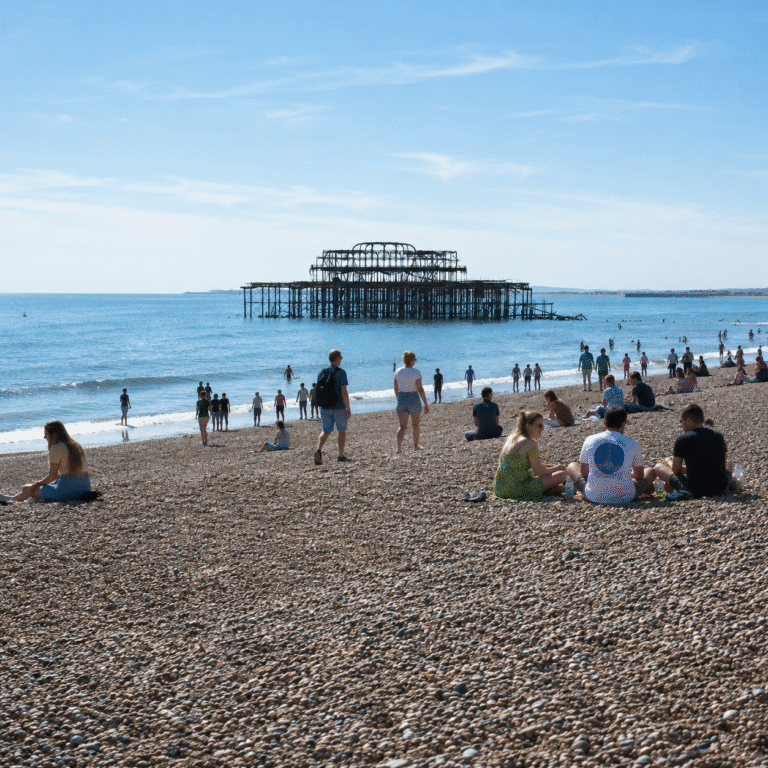
The West Pier is one of Brighton’s most loved and most photographed landmarks, a graceful Victorian skeleton standing out in the sea off the seafront. Once the grandest pleasure pier in the country, today its sculptural remains draw photographers, painters and the famous starling murmurations, and the West Pier still has a devoted following. This guide tells the story of the West Pier, what makes it special, and how to enjoy it today.
It is a landmark that means a great deal to the city, and even as a ruin it remains a defining part of the Brighton skyline.
Quick Reference
| Detail | Information |
|---|---|
| Opened | 6 October 1866 |
| Designer | Eugenius Birch, the great pier architect |
| Length | 1,115 feet |
| Listing | The first pier in England to be Grade I listed |
| Today | A protected ruin, cared for by the West Pier Trust |
| Best for | Photography, sunsets and the starling murmurations |
Table of Contents
A Grand Victorian Pier
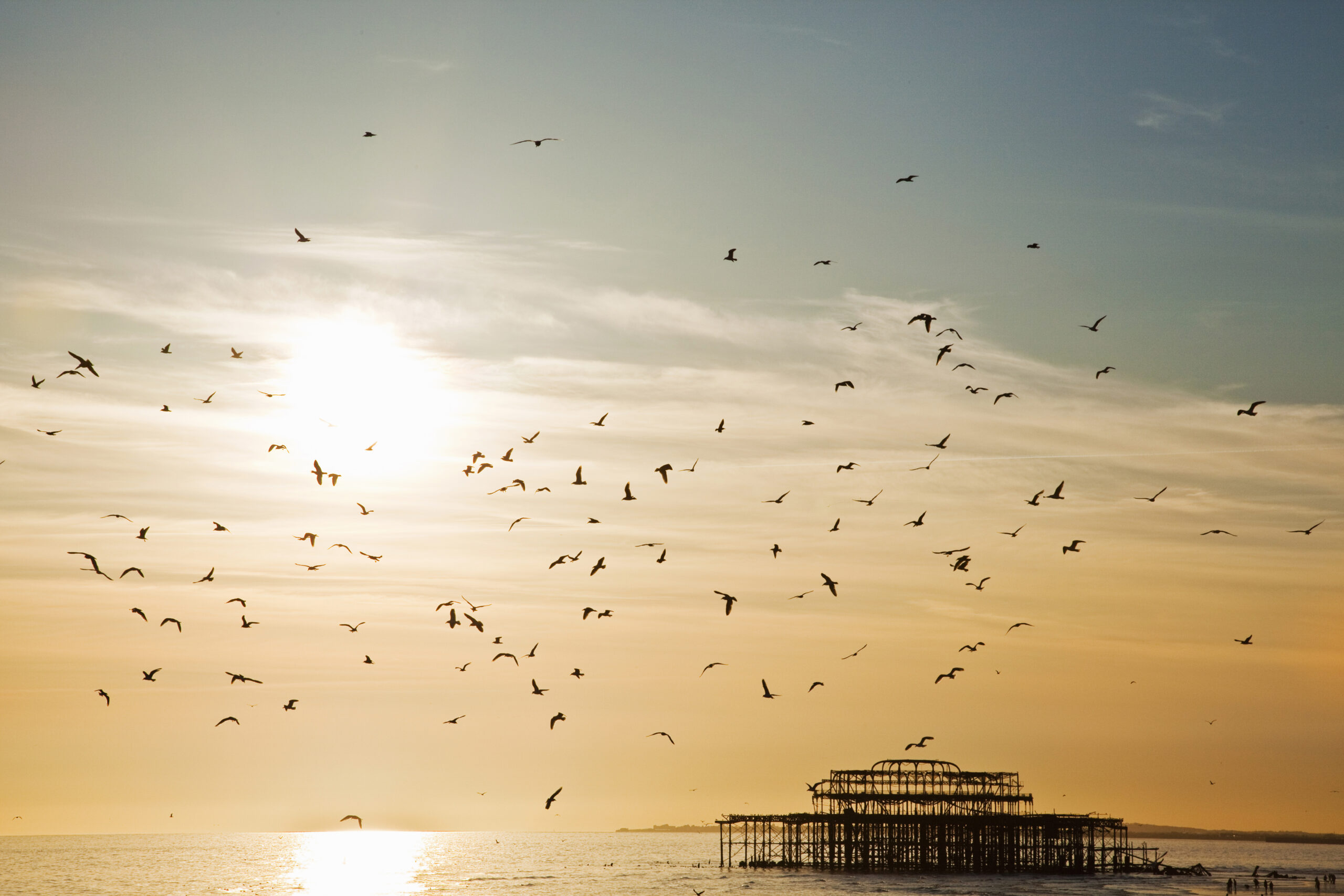
The West Pier opened on 6 October 1866 as Brighton’s second pier, designed by Eugenius Birch, the most celebrated pier architect of the age. It was built using cast-iron columns screwed directly into the seabed, strengthened with a lattice of ties and girders, an elegant piece of Victorian engineering that let the sea pass harmlessly beneath the deck. It stretched 1,115 feet out into the Channel.
Over the following decades it grew grander. A covered bandstand was added, then a pavilion at the seaward end, weather screens and a landing stage for steamships. A concert hall followed in 1916. At its peak just after the First World War, the West Pier was one of the most fashionable places on the south coast, drawing huge crowds for concerts, promenading and seaside entertainment. It became the first pier in England to be granted Grade I listed status, a recognition of just how special its design was.
Decline and the Fires
After decades as a star attraction, the pier slowly fell out of fashion, and the cost of maintaining a Victorian structure in the sea proved too great. It was closed to the public in 1975 on safety grounds, and despite years of campaigning to save it, the repairs needed were never carried out.
The structure was badly damaged by storms in late 2002, and then in March and May 2003 two fires destroyed most of what remained. The West Pier Trust describes the fires as arson attacks, although nobody has been convicted for them. What was left was the dramatic iron framework that stands in the sea today. Rather than erase the pier from the city, that skeleton has become an icon in its own right.
The West Pier Today
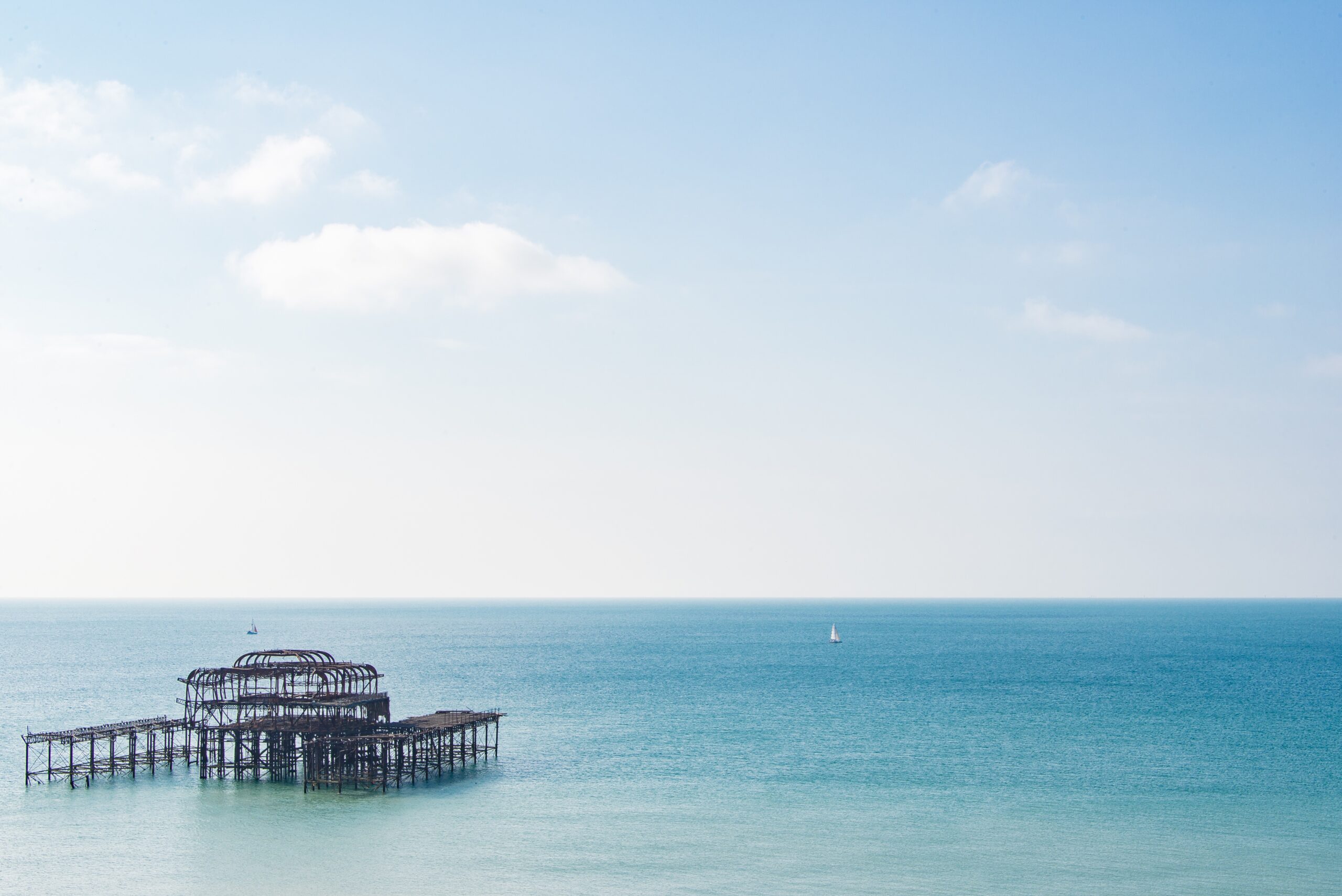
Far from being forgotten, the West Pier is now one of the most photographed structures in Brighton. Its sculptural ironwork, silhouetted against the sunset over the sea, has become one of the defining images of the city, and you will see it on postcards, prints and countless visitors’ photos.
It is also a wildlife spectacle. Through the winter months the pier is a roost for thousands of starlings, whose murmurations swirl over the ruins at dusk before settling on the ironwork for the night. It is one of the best free shows in Brighton, and the West Pier is one of the prime spots to watch it.
The pier is cared for by the West Pier Trust, which owns the site and is the proud landlord of the i360 tower built at its root on the shore. The Trust runs the West Pier Centre, its seafront home in an arch just east of the i360, with exhibitions, books, souvenirs and a programme of talks about the pier’s history. A restored 1866 octagonal kiosk, salvaged from the pier, has been preserved as part of the effort to keep its heritage alive.
How to See the West Pier
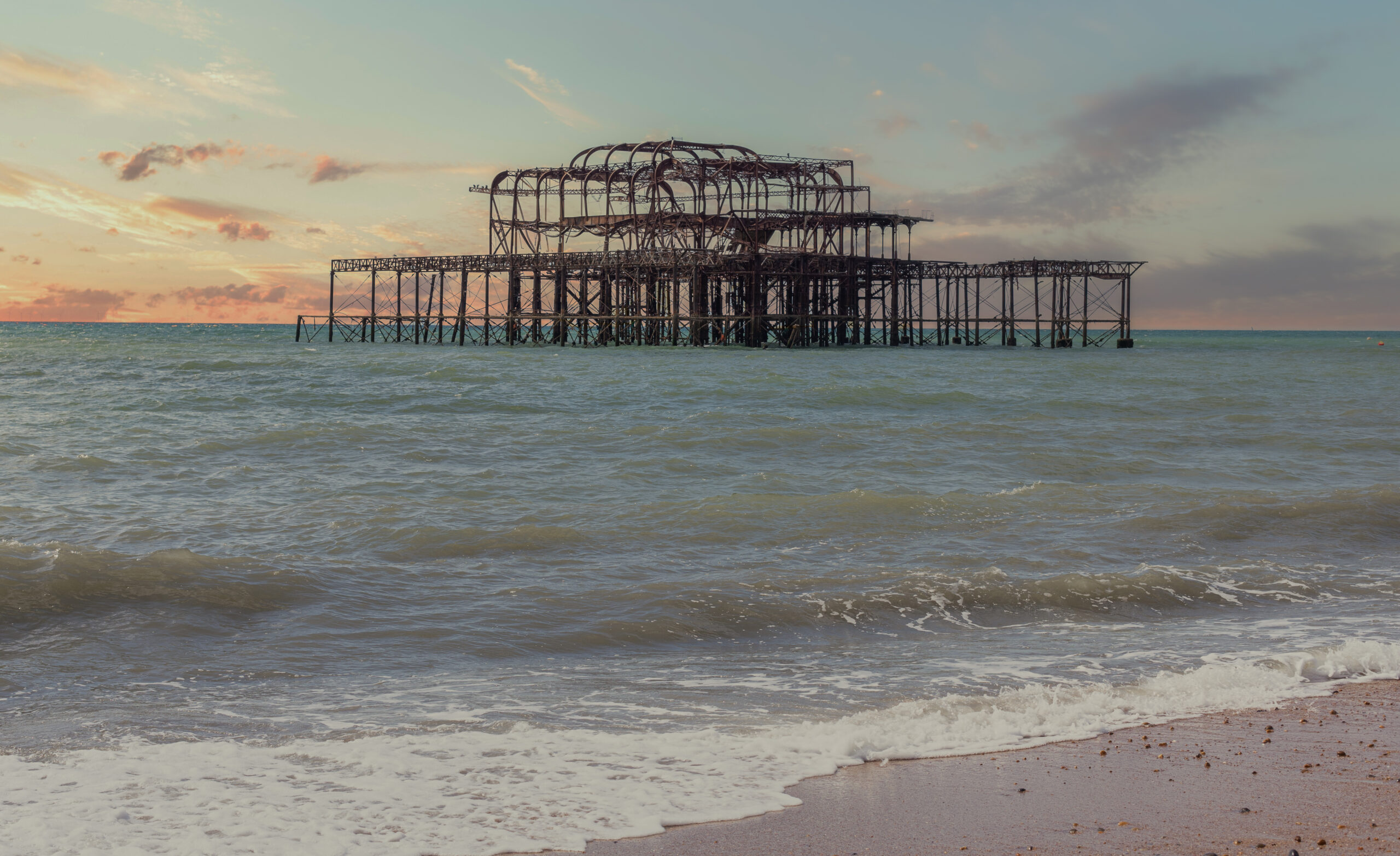
You do not need a ticket to enjoy the West Pier, you simply view it from the seafront. The promenade and beach between the i360 and the Palace Pier give the clearest views, and it looks its best in the soft light of early morning or at sunset, when the ironwork is silhouetted against the sky. It is an easy addition to a day on the seafront, covered in our Brighton beach guide. For the murmurations, head down around dusk on a winter evening.
For more on the pier’s history, the West Pier Trust runs the West Pier Centre near the i360, well worth a look when it is open, and a stroll along this stretch of seafront takes in the i360, the beach and the two piers in a single walk.
FAQs
Can you go on Brighton’s West Pier?
No. The West Pier has been closed to the public since 1975 and only its ruined framework remains, so it cannot be walked on. You can admire and photograph it from the seafront, and visit the West Pier Centre near the i360 to learn its story.
Why is the West Pier a ruin?
The pier closed in 1975 as it had become unsafe and too costly to repair. Storms in 2002 and two fires in 2003, widely believed to be arson, destroyed most of the structure, leaving the iron skeleton that stands today.
When was the West Pier built?
It opened on 6 October 1866, designed by the celebrated Victorian pier architect Eugenius Birch. It was Brighton’s second pier and later became the first pier in England to be Grade I listed.
What is the best time to photograph the West Pier?
Sunset is the classic time, when the ironwork is silhouetted against the sky over the sea. Winter evenings also bring the starling murmurations, which swirl over the pier at dusk before roosting.
What is the difference between the West Pier and the Palace Pier?
Brighton Palace Pier is the working pier with rides, arcades and food, further east along the seafront. The West Pier is the ruined Victorian pier to the west, near the i360.
Final Thoughts
The West Pier is a reminder of Brighton’s grand seaside heyday and, even as a ruin, one of the most beautiful sights on the seafront. Go for the sunset, the starlings or simply the view: it remains a true Brighton icon, cared for by a trust and a city that has never quite let it go.