Last Updated on 31 July 2026 by Dave King
Brighton Beach is one of the most visited stretches of coastline in England, and the reason most people come is simple: it is an easy, interesting seaside day out that does not require much planning. This guide covers what the beach is actually like, what you can do there, how to get around, and what to know before you go. Brighton Station is around a 10-minute walk from the seafront, the beach is pebbled rather than sandy, and key attractions like Brighton Palace Pier, Volk’s Electric Railway and Sea Lanes are all close enough to combine in one visit. This is your ultimate Brighton beach guide!
Table of Contents
Brighton Beach at a glance
| Feature | Details |
|---|---|
| Beach type | Pebble and shingle |
| Seafront length | Around 5 miles |
| Water quality | Brighton Central was rated Good in 2025. Nearby Brighton Kemptown was rated Excellent. In the 2025 Blue Flag awards, Hove Lawns and Saltdean received Blue Flag status. |
| Brighton Palace Pier | A £1 admission charge applies during peak periods from March to October. |
| Volk’s Electric Railway | Runs along the seafront from near the pier towards Black Rock. Open since 1883 and promoted as the world’s oldest working electric railway. |
| Sea Lanes outdoor pool | 50m heated outdoor pool on the beach, heated to 19°C all year round. |
| Nearest station | Brighton, around 10 minutes’ walk to the seafront |
As an Amazon Associate I earn from qualifying purchases. The product links below are paid links. Buying through one costs you nothing extra and never changes what goes on the list.
Recommended Products

Water Shoes
- Barefoot-feel aqua shoes
- Quick-drying and breathable
- Protects feet on the pebbles

Voyager Folding Chairs (2 Pack)
- Set of two folding chairs
- Steel frame, holds up to 120kg
- Side pocket and cup holder

HiiPeak Microfibre Beach Towel
- Large 180 x 90cm
- Quick-drying, sand-resistant microfibre
- Packs into a mesh bag with hanging strap

Yafaca Pop-Up Beach Tent
- Pops up in seconds, no assembly
- UV 50+ sun protection
- Sleeps up to 3, sandbags and pegs included

Spopal Portable Rechargeable Shower
- Rinse off salt and sand anywhere
- 6000mAh battery, up to 150 minutes
- Adjustable spray modes, USB-C charging

Bladeless Neck Fan
- Hands-free, bladeless and hair-safe
- 3 speeds, 360 degree airflow
- 4000mAh battery, USB-C charging

Niphean Inflatable Paddle Board
- Complete kit: paddle, pump, fins, leash and backpack
- Holds up to 450lbs (about 200kg)
- Beginner-friendly tracking fin

Full-Face Snorkel Mask
- Breathe through nose and mouth
- 180 degree panoramic view
- Anti-fog design, action-camera mount
What is Brighton Beach actually like?
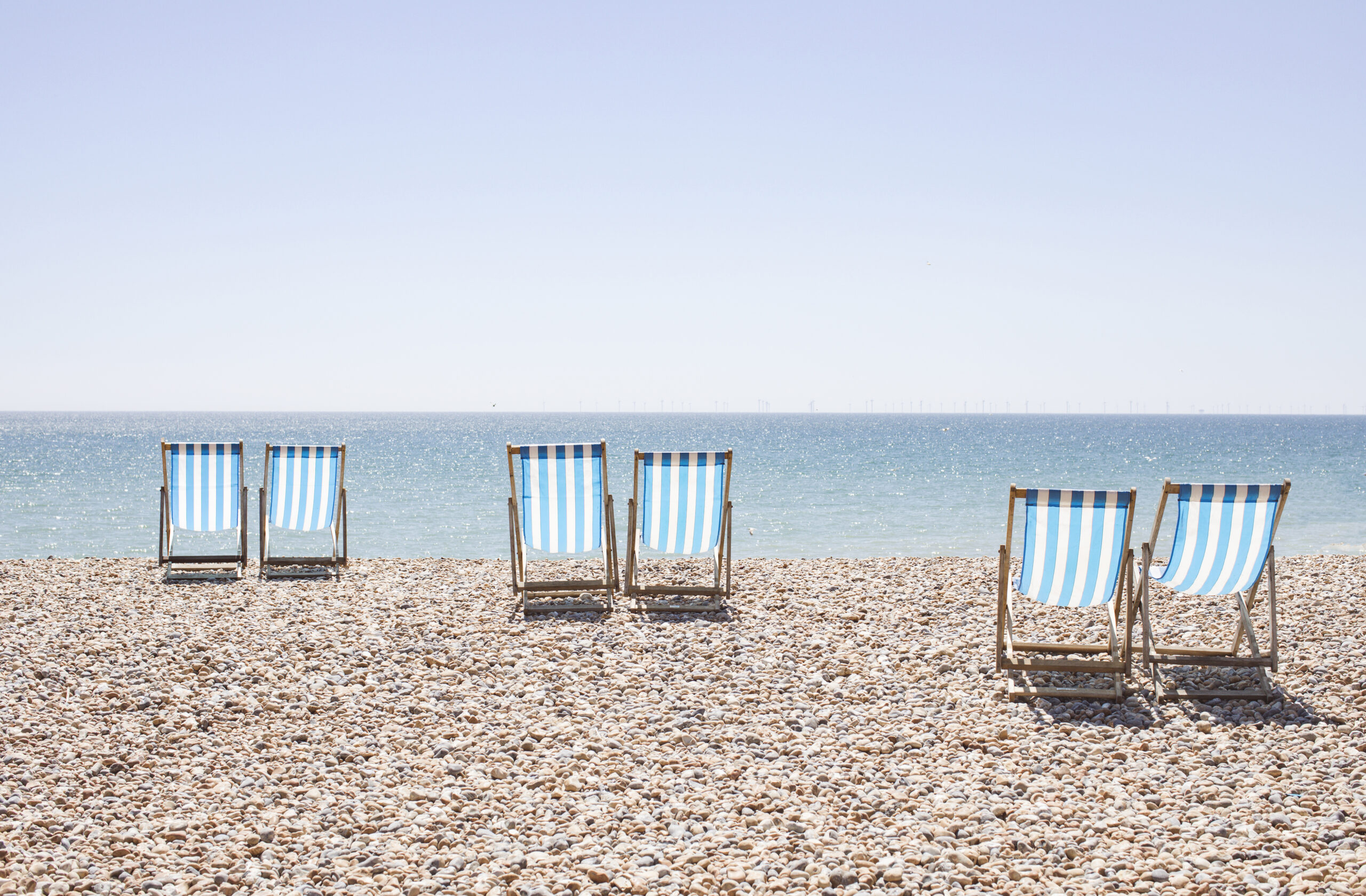
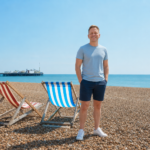
It is a pebble beach, not a sandy one. That still catches some first-time visitors out. The seafront runs for miles in both directions, the promenade is flat and wide, and on a clear day the view across the Channel is excellent. It gets very busy on warm weekends from late spring into early autumn. In winter it is much quieter and much more about walking than sunbathing.
The beach sits between two piers. Brighton Palace Pier is still operating and remains the loud, busy focal point of the seafront. The West Pier is now a ruin in the sea, but it is still one of the most photographed sights on the coast and absolutely worth seeing.
What can you do at Brighton Beach?
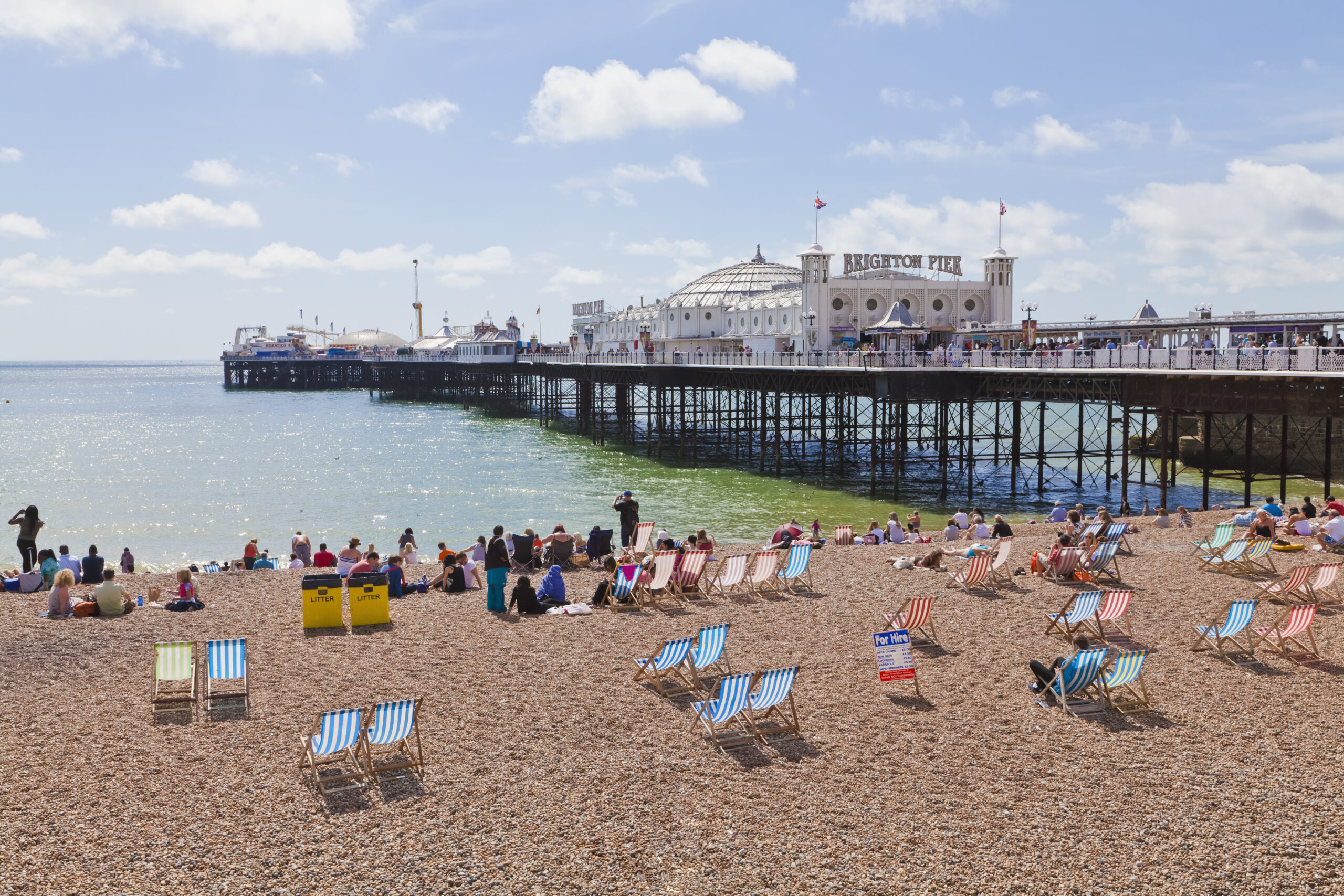
Swimming is possible and popular in summer, though the sea is still cold by most people’s standards. If you want a warmer and more controlled option, Sea Lanes is a 50-metre outdoor pool heated to 19°C on the beach at Black Rock, and it runs year-round.
If you want a classic Brighton activity, Brighton Palace Pier has rides, arcades and food stalls. It currently charges £1 admission during peak periods, which is worth knowing if you are visiting with children or a larger group.
The Volks Electric Railway runs from the Aquarium station near the pier east towards Black Rock. It has been running since 1883 and is promoted as the world’s oldest working electric railway. It is a short ride rather than a major excursion, but it is one of the easiest old-Brighton attractions to fit into a beach day.
The Undercliff Walk
If you want to get away from the main beach crowds, the Undercliff Walk is one of the best things to do. Brighton & Hove says it runs from behind Asda at Brighton Marina to the city boundary at Saltdean and is just over 5 kilometres long. It is flat, accessible and far quieter than the central promenade, with cafés and toilets available along the route.
You can walk it one way and come back by bus, or start from the Saltdean end and walk back towards the marina if that suits your day better. It is one of the easiest ways to see a quieter side of the coast without needing a car.
Facilities and accessibility
There are accessible toilets along the promenade, and Brighton & Hove lists Shelter Hall as one of the city’s Changing Places toilet locations. There are also wheelchair-accessible beach areas and access improvements on the seafront, including a central Brighton beach deck near the Palace Pier and an accessible beach area below the Brighton Centre near Shelter Hall.
Getting there and parking
By train, Brighton is straightforward. There are regular direct trains from London Victoria and London Bridge, and the seafront is around 10 minutes downhill on foot from Brighton Station.
By car, Regency Square and Churchill Square are still the easiest central car parks for the main beach. If you are heading east instead, Brighton Marina is often useful, and the marina’s own travel page says it offers free parking for marina visitors with a 4-hour time limit.
If you want a fuller parking breakdown, see our guide to parking in Brighton for the practical details before you drive in.
Food near the beach
The promenade has fish and chip shops, cafés and seafront restaurants at a wide range of prices. If you want specific recommendations rather than guessing, see our guides to best fish and chip shops in Brighton and best restaurants in Brighton. Both are better for making a proper food decision than relying on whatever happens to be closest to the pier.
What else is nearby?
The Royal Pavilion is around a ten-minute walk from the seafront, and the gardens are free to enter. The Lanes and North Laine are both within easy walking distance if you want to turn a beach day into a wider Brighton day out. If the weather changes, SEA LIFE Brighton is right by the pier and promotes itself as the world’s oldest operating aquarium, dating back to 1872.
Practical tips
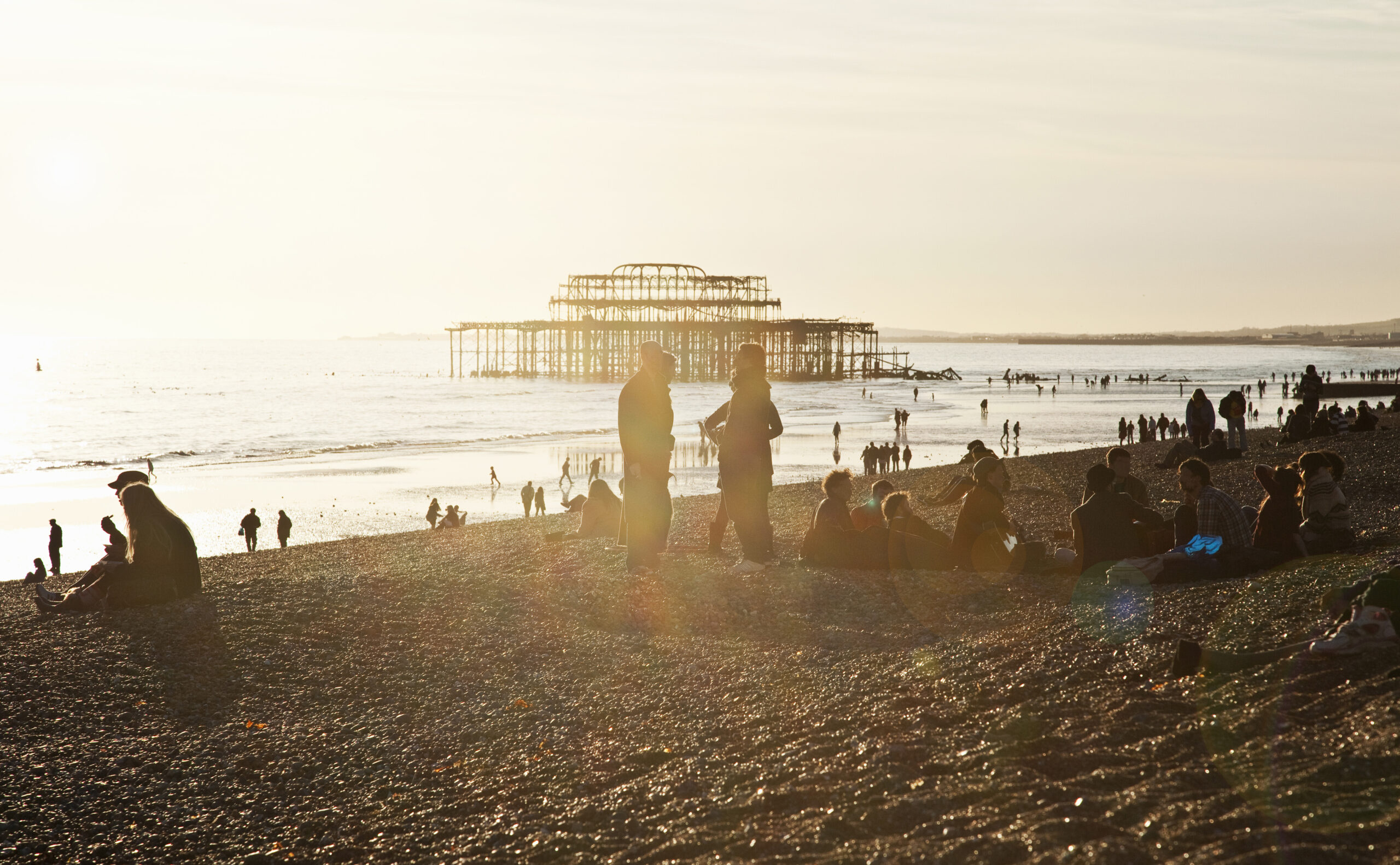
Bring something to sit on. Pebbles get uncomfortable quickly without a mat, chair or hired deckchair. Brighton Beach works much better if you plan for that. Checking tide times is also sensible if swimming or walking near the waterline matters to you, as lower tide can reveal a firmer strip below the pebbles.
The seafront gets very busy on bank holiday weekends and on the hottest summer Saturdays. If you want a quieter experience, a weekday in May, June or September is usually easier to enjoy than the absolute summer peak. For walks, winter and colder spring days can still be worth it, especially if you are more interested in the sea, the West Pier and the atmosphere than sitting on the beach.
FAQs
Is Brighton Beach sandy or pebbly?
Brighton Beach is pebble and shingle throughout. There is a narrow sandy strip exposed at low tide but the main beach surface is pebbles. Most visitors bring a mat, deckchair or camping chair, deckchair hire is available on the beach if you prefer not to carry one.
Is Brighton Beach good for swimming?
Yes, swimming is popular particularly in summer. The water quality around the Palace Pier section is rated Good. The sea is cold by most standards, especially before July. Sea Lanes at Black Rock is a heated outdoor 50-metre pool on the beach, open year-round at 19°C, and a good alternative if you want to swim without the chill of the open sea.
Is Brighton Palace Pier free?
Brighton Palace Pier reintroduced a £1 admission charge during peak periods in 2026. The beach and promenade around the pier are always free. The fairground rides and arcades on the pier are paid separately on top of any admission charge.
How do I get to Brighton Beach from London?
Regular direct trains run from London Victoria and London Bridge to Brighton, taking around an hour. Brighton station is about a ten-minute walk downhill to the seafront. Trains run very frequently throughout the day and do not need to be booked in advance for a standard day trip.
Where is the best place to park for Brighton Beach?
The closest car parks are Regency Square and Churchill Square multi-storey, both within a short walk of the main beach. On-street parking is available on Marine Parade but meters are in operation during busy periods. Parking fills quickly on warm summer days, arriving early or using public transport is strongly recommended.
What is the Undercliff Walk?
The Undercliff Walk is a flat, accessible coastal path running from Brighton Marina east to Saltdean, just over five kilometres. It runs below the cliffs with uninterrupted sea views and is open to pedestrians and cyclists. Toilets and cafés are available at points along the route. It is much quieter than the main promenade and one of the best free walks in the Brighton area.
What is the best time of year to visit Brighton Beach?
May and early June offer good weather with smaller crowds than peak summer. Late August and September are also good, the sea is at its warmest and the school holiday crowds have thinned. Weekdays are significantly quieter than weekends throughout the summer. Winter is worth visiting for a different experience , the seafront is atmospheric and the Undercliff Walk is particularly good on a clear cold day.
Final Thoughts
Brighton Beach is straightforward to enjoy and does not need much planning. The main things to know before you go are that it is pebble rather than sand, Brighton Palace Pier charges £1 to enter in peak periods, and the beach gets very busy on sunny bank holidays. A weekday in May or early September gives you good weather with significantly fewer people.
For a full day, beach in the morning, a walk along the Undercliff or into the Lanes in the afternoon, and fish and chips or a seafront lunch covers most of what Brighton does well. If you want a swim in something reliably warm, Sea Lanes at Black Rock is a better bet than the open sea in spring or early summer.