
Anyone who has eaten chips on the seafront knows the feeling of being watched. The seagulls in Brighton are bold, loud and everywhere, wheeling over the pier, patrolling the Lanes and lining the rooftops, and they are one of the first things visitors notice. What surprises most people is the reason there are so many, because these birds are a protected and declining species rather than an unstoppable swarm.
So why are there so many seagulls in Brighton, and why are they so confident about your lunch? The short version is roofs and food. The longer version takes in changing food sources, pressure on natural habitats and a clever bird that worked out town life suits it. Here is the honest explanation, along with how to hang on to your chips.
Table of Contents
Quick answers
| Question | Short answer |
|---|---|
| Are they actually seagulls? | No single bird is a “seagull”; most here are herring gulls |
| Why so many? | Rooftops act like safe cliffs, and food is easy to find |
| Are they protected? | Yes, under the Wildlife and Countryside Act 1981 |
| Are numbers rising? | No, herring gulls are red-listed and declining nationally |
| How do I protect my food? | Keep it covered and watch the gull, as they hesitate when seen |
There is no such thing as a seagull
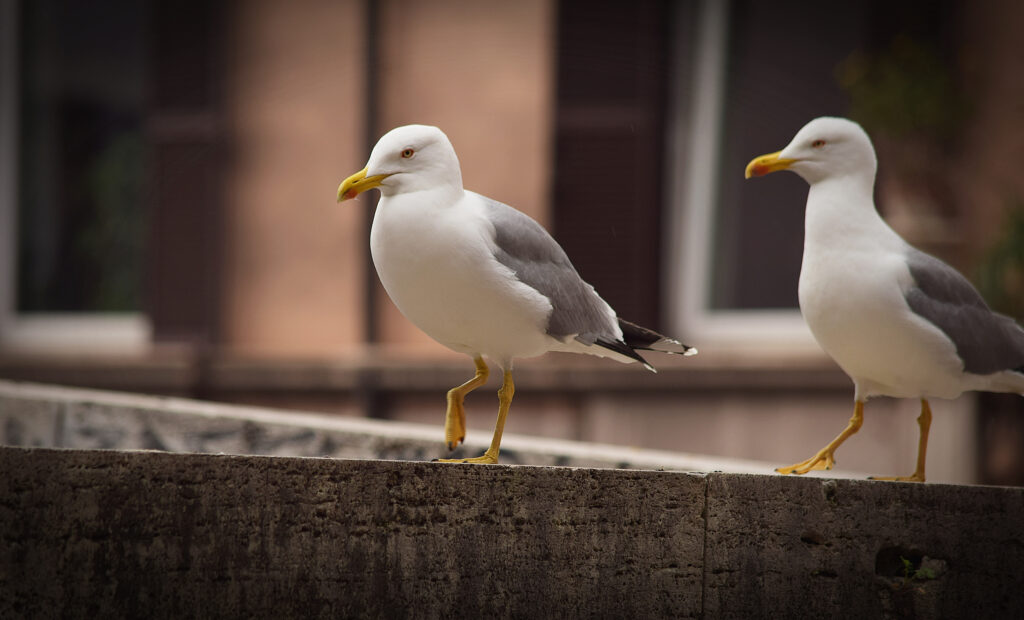
The first thing to clear up is the name. No bird is actually called a seagull. It is a catch-all term for gulls that live near the sea, and the one arguing with you over a doughnut is almost always a herring gull, with some lesser black-backed gulls mixed in. Herring gulls are the classic large grey-and-white gull with pink legs, a yellow bill with a red spot, and the loud laughing call that doubles as the sound of the British seaside.
Why there are so many seagulls in Brighton
There are two main reasons gulls have moved into town, and Brighton offers both in abundance: safe places to nest and easy food.
The rooftops do the first job. A high ledge on a warm chimney stack or a flat roof behaves a lot like the coastal cliffs herring gulls would naturally nest on, with the bonus of being safe from foxes and other ground predators. Once a pair settles and raises chicks successfully, they tend to come back to the same roof year after year, and the colony grows.
The food does the rest. A busy seaside city produces a huge amount of dropped chips, overflowing bins and food left on outdoor tables, and gulls are intelligent, adaptable birds that switched from a diet of fish to just about anything. Pressure on natural food sources and habitats has made life harder for gulls in the wild, while Brighton’s rooftops, street litter and insecure refuse bags give them easier urban feeding and nesting opportunities.
That means an afternoon on the beach or near the best fish and chips in Brighton can offer easier pickings than the open sea. They are not the only Brighton birds worth watching either, as the winter starling murmurations over the piers are a spectacle of their own.
The twist: they are declining and protected
Here is the part that surprises people. Despite how it feels on a crowded seafront, herring gulls are in real trouble. Coastal breeding herring gull numbers have fallen by more than 50% since the 1969-70 census, with further declines reported since Seabird 2000, and herring gulls are red-listed in the UK. The urban birds are simply more visible than their coastal cousins, and their numbers do not make up for the losses along the coast.
That protected status matters in practice. Like all wild birds in the UK, gulls are covered by the Wildlife and Countryside Act 1981, which makes it illegal to intentionally kill, injure or take them, or to take, damage or destroy an active nest or its eggs, and lethal control of roof-nesting gulls is only permitted under a specific licence as a last resort, where a significant risk to public health or safety has been identified. So the swarm impression is a little misleading. What you are watching is a concentrated, adaptable remnant of a shrinking species.
Why they are so bold
Gulls are far cleverer than they get credit for. They are natural scavengers and opportunists, and in town they have learned that people mean easy calories. A gull will sit on a roof or a railing, watch you eat, and time its move for the exact second you look away or lift the food into the open.
This is also why simple scare tactics are not always reliable. Decoy birds of prey can lose their effect once gulls learn they are not a real threat, while the RSPB points instead to reducing accessible food waste, preventing litter and making bins and waste containers gull-proof.
How to protect your chips
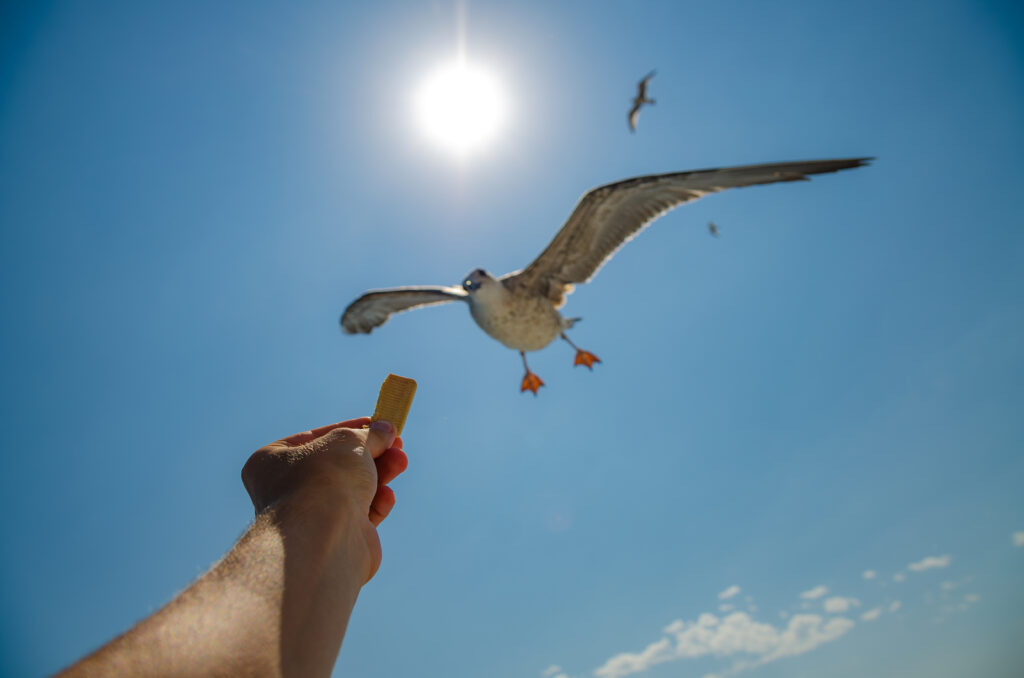
The good news is that a bit of awareness goes a long way, and one tactic has proper research behind it. A study of herring gulls found they are slower to approach food, and often back off entirely, when a person is looking directly at them, so eye contact genuinely helps. Stare down the gull eyeing your lunch and it will usually think twice.
Beyond that, keep it simple. Hold food close and covered until you are ready to eat, sit with your back to a wall rather than out in the open, and do not wave chips around at arm’s length. Try not to feed them, however tempting, because it rewards exactly the behaviour that causes trouble and only makes the problem worse. Expect the boldest behaviour during nesting season in late spring and summer, when adults are defending eggs and chicks and a swoop is usually a warning to keep clear of a nest rather than a raid on your food.
For all the grumbling, the city has embraced the bird anyway. Brighton & Hove Albion play as the Seagulls, and gull imagery turns up across the city’s postcards and street art, which is a very Brighton response to a bird most towns just complain about. If you want more of that local character, our guide to Brighton’s history fills in the rest.
Frequently asked questions
Are Brighton’s seagulls protected?
Yes. Like all wild birds in the UK, gulls are protected under the Wildlife and Countryside Act 1981. It is illegal to intentionally kill, injure or take them, or to take, damage or destroy an active nest or its eggs, and authorities can only license control as a last resort where a significant public health or safety risk has been identified.
What kind of seagull is in Brighton?
There is no bird actually called a seagull. Most of the large, bold gulls you see are herring gulls, with some lesser black-backed gulls. Herring gulls have grey backs, pink legs, a yellow bill with a red spot, and a loud laughing call.
Are there really more seagulls than before?
It feels that way in town, but herring gulls are red-listed in the UK. Coastal breeding numbers fell by more than 50% between the 1969-70 census and Seabird 2000, and urban increases do not appear to make up for coastal losses.
Why do the seagulls in Brighton steal food?
Gulls are intelligent scavengers that have learned human food is easy calories, especially by the seafront. They time a grab for the moment you look away, so keeping food covered and making eye contact both help.
Is it illegal to feed the seagulls in Brighton?
Feeding gulls is strongly discouraged rather than treated as a simple Brighton-wide ban. It can make gulls bolder around people, so follow any local signage where displayed and do not feed them intentionally.
When are seagulls most aggressive?
They are most defensive during nesting season in late spring and summer, when adults protect eggs and chicks on the rooftops. Swooping is usually a warning to keep away from a nest rather than an attack on you.
Final thoughts
So the seagulls in Brighton are not really a plague, but a clever, protected bird making the best of a city built right beside its food. Keep your chips covered, give the nearest gull a hard stare, and enjoy the racket, because it is as much a part of the seafront as the pier itself.