
Last Updated on 18 August 2026 by Dave King
SEA LIFE Brighton is the kind of place locals walk past for years before finally going in, usually with visiting family or on a wet afternoon, and then wish they had gone sooner. It sits right on the seafront opposite the Palace Pier, and it is not just any aquarium: the Brighton aquarium opened in 1872 and is the oldest continuously operating aquarium in the world. This guide covers what is actually inside, what tickets cost, how to get there, and whether it is worth your time, written from a local point of view rather than a brochure.
Table of Contents
SEA LIFE Brighton at a Glance
| Detail | Information |
|---|---|
| Where | Marine Parade, on the seafront opposite Brighton Palace Pier |
| Opened | 1872, the world’s oldest operating aquarium |
| Creatures | Over 5,000, from sharks and rays to seahorses |
| Highlights | Victorian arcade, underwater tunnel, green turtles Lulu and Gulliver, glass-bottom boat |
| Time to allow | Two to three hours |
| Tickets | Cheaper booked online; prices vary daily, under-2s free |
| Open | Most days, with seasonal hours. Check before visiting |
A proper piece of Brighton history
The building is half the appeal, and it is the thing the brochures undersell. The Brighton aquarium was designed by Eugenius Birch, the same architect behind the West Pier, with work starting in 1869 and the doors opening in 1872. That makes it the oldest continuously operating aquarium in the world, and the original High Victorian arcade, all vaulted ceilings and stone columns, is still the heart of the place. It is Grade II listed, and walking the old arcade with tanks set into the walls feels closer to a Victorian gallery than a modern attraction. If you like the seafront’s older landmarks, it pairs well with the story of Brighton’s West Pier, another of Birch’s creations.
What’s inside
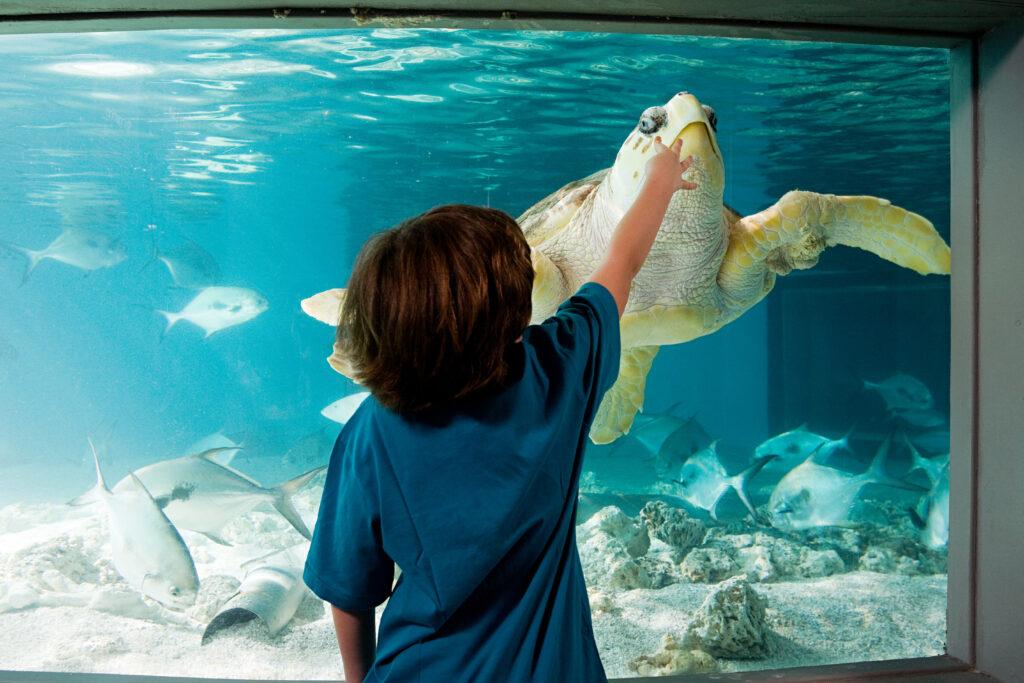
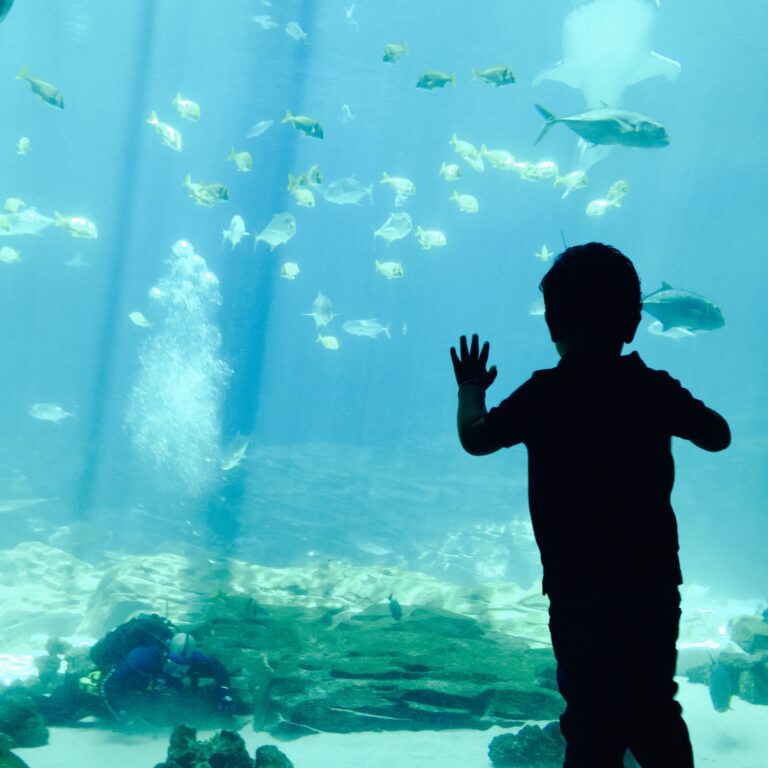
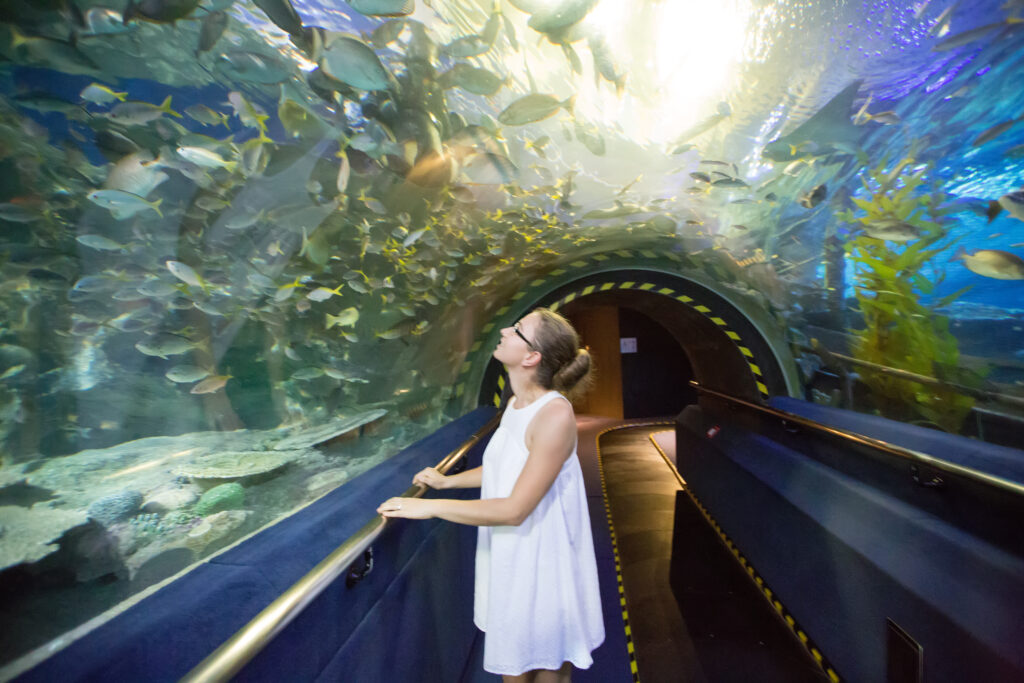
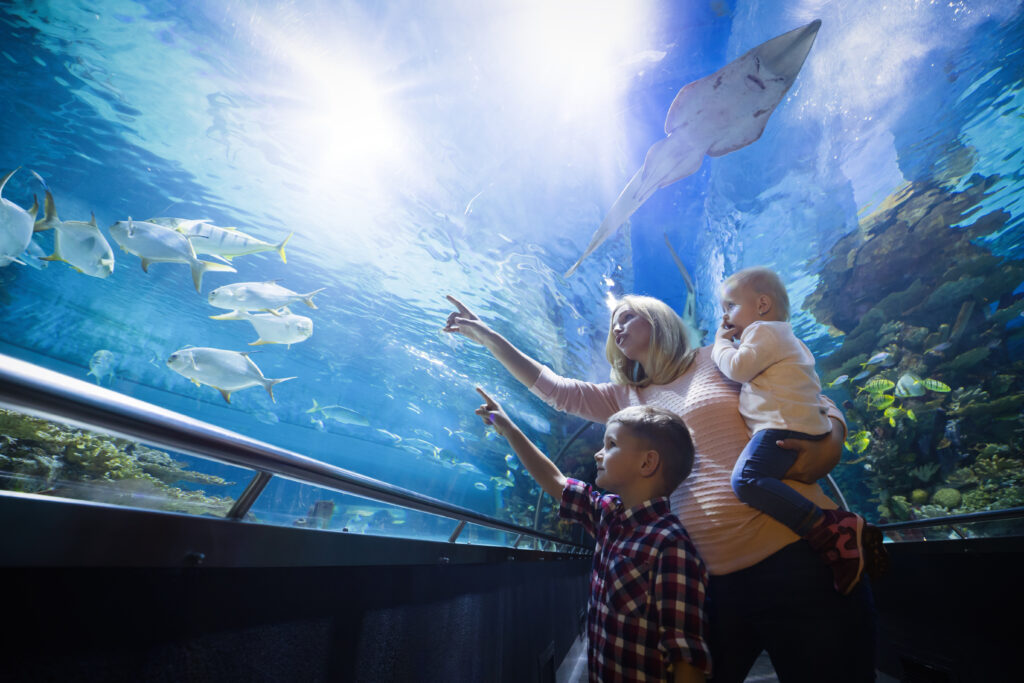
Behind that Victorian frontage is a full modern aquarium. The centrepiece is a 750,000-litre ocean display housed under the original 1872 auditorium, home to sharks, rays, tropical fish and green sea turtles Lulu and Gulliver, who are firm local favourites. You view it from a floor-to-ceiling window and from an underwater glass tunnel with the animals passing overhead.
Beyond the main tank there is plenty more to fill a couple of hours. A rainforest section swaps the sea for terrapins, poison dart frogs, tarantulas, scorpions, snails and other rainforest creatures. There is a seahorse display with a working breeding programme, a Secrets of the Reef area built around a Maldives coral reef with a crawl-through tunnel for younger visitors, and rockpools where visitors can get close to native ray and shark eggs. With over 5,000 creatures in total, it is genuinely easy to spend two to three hours here without rushing.
The glass-bottom boat
The one thing that is unique to this SEA LIFE and worth knowing about is the glass-bottom boat. It floats on top of the big ocean tank and gives you an aerial view down onto the turtles, sharks and rays while a marine expert talks you through what you are seeing. It is a paid add-on rather than part of standard entry, booked online when you buy your tickets, and you choose a slot for a little after your arrival time. For families it tends to be the highlight of the trip.
Tickets and opening times
SEA LIFE uses daily dynamic pricing, so there is no single fixed admission figure, and tickets are always cheaper booked online in advance than bought at the door. As a guide, standard online tickets currently start from £14 per adult during the summer VAT saving period, with under-2s free, but prices and offers can change, so check the official SEA LIFE Brighton website for your date before travelling. It is also worth looking there for any online-only or local resident offers, which have appeared in the past. The aquarium is open most days, with hours that shift by season, so confirm opening times on the day you plan to visit.
Getting there and accessibility
The location could not be more central to the seafront. The aquarium sits on Marine Parade directly opposite Brighton Palace Pier, about a ten-minute walk down from the centre and the Lanes. There is a nice piece of symmetry to getting there too: the terminus of Volk’s Electric Railway, the world’s oldest operating electric railway, is right outside, so two record-holding Victorian attractions sit side by side. Plenty of buses stop near the Steine, and if you are driving, read our Brighton parking guide first, as seafront spaces are limited and pricey, with disabled parking on Madeira Drive.
On accessibility, most of the aquarium has level or ramped access, with the main exception being the historic auditorium, and there is seating dotted throughout for anyone who needs to rest. It is self-assessed information, so contact the venue directly if you have specific access needs.
Is SEA LIFE Brighton worth it?
Honestly, it depends who you are bringing. For families, especially with younger children, it is an easy win and one of the best rainy day options in Brighton, with enough to hold attention for a couple of hours. The building alone is worth seeing if you have any interest in the city’s Victorian heritage. The honest caveats: it is a paid attraction and not a huge one, so it pays to book online, arrive without a tight schedule, and lean into the history rather than expecting a vast modern mega-aquarium. Do that and most people leave glad they went. If you are building a wider day out, it slots neatly into a seafront wander with the pier and the beach.
FAQs
How much are SEA LIFE Brighton tickets?
There is no fixed price, as SEA LIFE uses daily dynamic pricing. Online tickets are cheaper than the door and start from £14 per adult during the summer saving period, with under-2s free. Check the official site for the exact price on your date.
Is SEA LIFE Brighton really the oldest aquarium in the world?
Yes. The Brighton aquarium opened in 1872 and is recognised as the oldest continuously operating aquarium in the world, with much of the original Victorian building still in use.
How long do you need at the aquarium?
Most visitors spend two to three hours, more if you add the glass-bottom boat or take your time around the rockpool and rainforest sections.
Is it good for young children?
Yes. It is popular with families, the crawl-through reef tunnel and rockpool are especially good for younger visitors, and there are family-friendly facilities on site.
Is it a good rainy day option?
It is one of the better ones in the city. Being fully indoors and on the seafront, it is an easy place to retreat to when the weather turns.
Final Thoughts
SEA LIFE Brighton is more than a wet-weather backup. It is a genuine piece of the city’s history, the world’s oldest aquarium wrapped in a listed Victorian building, with turtles, sharks and a glass-bottom boat that keep children fascinated. Book online to save, allow a couple of hours, and treat the old arcade as part of the show. If you want to build it into a bigger day, our guide to fun things to do in Brighton sets out what to pair it with along the seafront.