Last Updated on 18 June 2026 by Dave King
Table of Contents
- Brighton recycling rules: Simple, local, effective.
- Brighton recycling rules: What to recycle?
- Where are Brighton’s key recycling centres and drop-off points?
- How does the Brighton waste collection schedule affect recycling?
- What are common recycling mistakes in Brighton, and how to avoid them?
- Quick Guide: What Goes Where?
- What easy eco wins can Brighton residents and visitors start today?
- Recycle with Confidence in Brighton & Hove
- Useful Reads
Brighton recycling rules: Simple, local, effective.
Recycling matters in Brighton & Hove. This practical guide covers what to recycle, where to take items, common slip-ups, and quick actions that genuinely help, all within Brighton & Hove’s recycling rules. It details accepted materials, main recycling centres, collection days, frequent mistakes, and simple eco-wins you can start right away.
Brighton recycling rules: What to recycle?
Brighton & Hove follows clear household recycling rules designed to reduce contamination and make sure materials actually get recycled. The council sets these guidelines so items are processed correctly. Following them helps cut landfill and makes sorting more efficient across the city.
Which materials are accepted in Brighton recycling bins?
Household mixed recycling in Brighton & Hove usually accepts:
- Paper and cardboard: clean and dry
- Metal tins and cans: clean and dry
- Aerosols: empty
- Plastics: plastic bottles (all kinds, rinsed and squashed, with lids, pumps and triggers left on) plus plastic pots, tubs and trays (rinsed and squashed. Do not include plant pots).
All items for mixed recycling must be placed loose in the bin, not in plastic bags. Always follow the labels on your own bins or boxes, and check the council’s collection day checker for your address, as rules can vary by property type.
Do not put these in mixed recycling:
- Plastic bags: Not accepted in mixed recycling. Reuse or recycle at supermarket soft-plastic points where available.
- Plastic film and wrappers: Not accepted in mixed recycling. Reuse or recycle at supermarket soft-plastic points where available.
- Polystyrene
- Shredded paper
- Plant pots
- Glass bottles and jars (as glass is collected separately)
Take cartons and Tetra Pak to a carton recycling point. Check the council website or their Recycling A to Z guide for your nearest location and specific guidance.
Understanding Brighton’s recycling containers and colours
Brighton & Hove uses various containers and colours for waste, which can vary depending on your property type (e.g., houses, flats, communal bins). To ensure you are sorting correctly, always follow the labels on your specific bins and check the council’s collection day checker for your address.
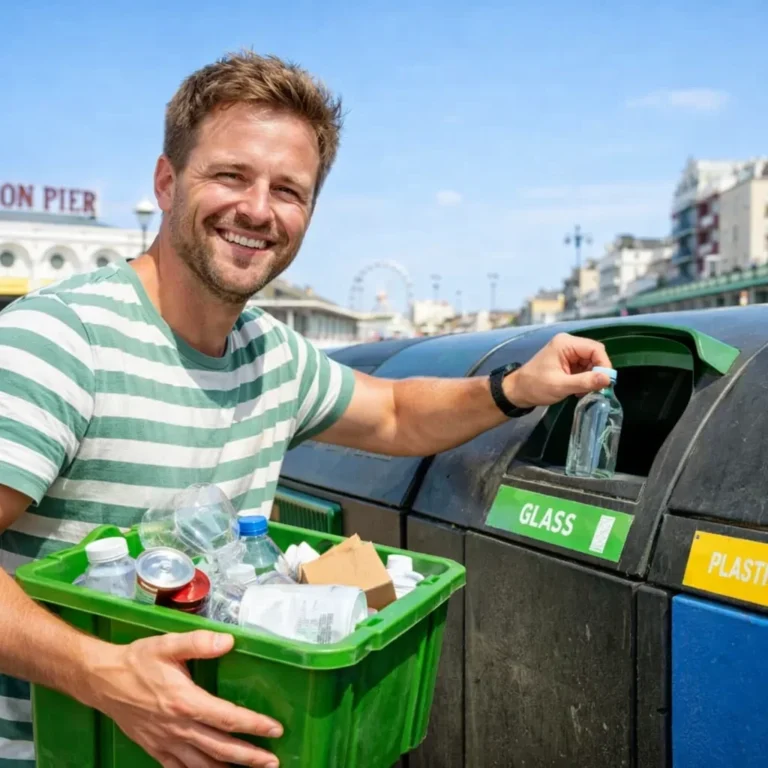
Glass bottles and jars go in the black glass box or communal glass bin, rinsed, with metal lids left on. Plastic lids go in general waste.
Where are Brighton’s key recycling centres and drop-off points?
Brighton & Hove has several handy recycling sites across the city. These centres take a wider range of items than kerbside collections and are ideal for things that will not fit in your bins.
What services do Brighton and Hove Household Waste Recycling Sites offer?
The Household Waste Recycling Sites provide:
- Recycling facilities: For a wide range of plastics, metals, glass, paper, and cardboard.
- Bulky waste drop-off: For furniture and larger items.
- Small electricals: Drop-off points for electrical items.
Before you go, always check the council website for access rules, permitted vehicle types, and what specific items you can bring. This ensures a smooth visit.
Which local businesses help Brighton’s recycling efforts?
Local businesses play a big part in our city’s recycling and waste reduction. Many independent shops, for example, encourage customers to bring reusable bags or containers, and some offer refill or low-packaging options.
These places help reduce waste and spread practical recycling tips around the neighbourhood.
How does the Brighton waste collection schedule affect recycling?
The collection schedule balances regular recycling pickups while reducing unnecessary truck journeys. Knowing your collection day helps prevent bins from overflowing and keeps recyclable material moving.
When are rubbish and recycling collected in Brighton?
Collection schedules for rubbish and recycling vary by address. Food waste collections are collected weekly where available. The council is expanding food waste collections across more flats and communal properties, with some central and communal areas scheduled to begin in March 2026. Timelines can change, so please use the council’s collection day checker for your address to confirm your specific collection days and the availability of food waste collection.
How do I dispose of bulky waste and garden waste in Brighton?
If you need to get rid of bigger items or garden clippings:
- Bulky waste collection: Book a council bulky waste collection. Check the council website for current information on booking and any associated costs.
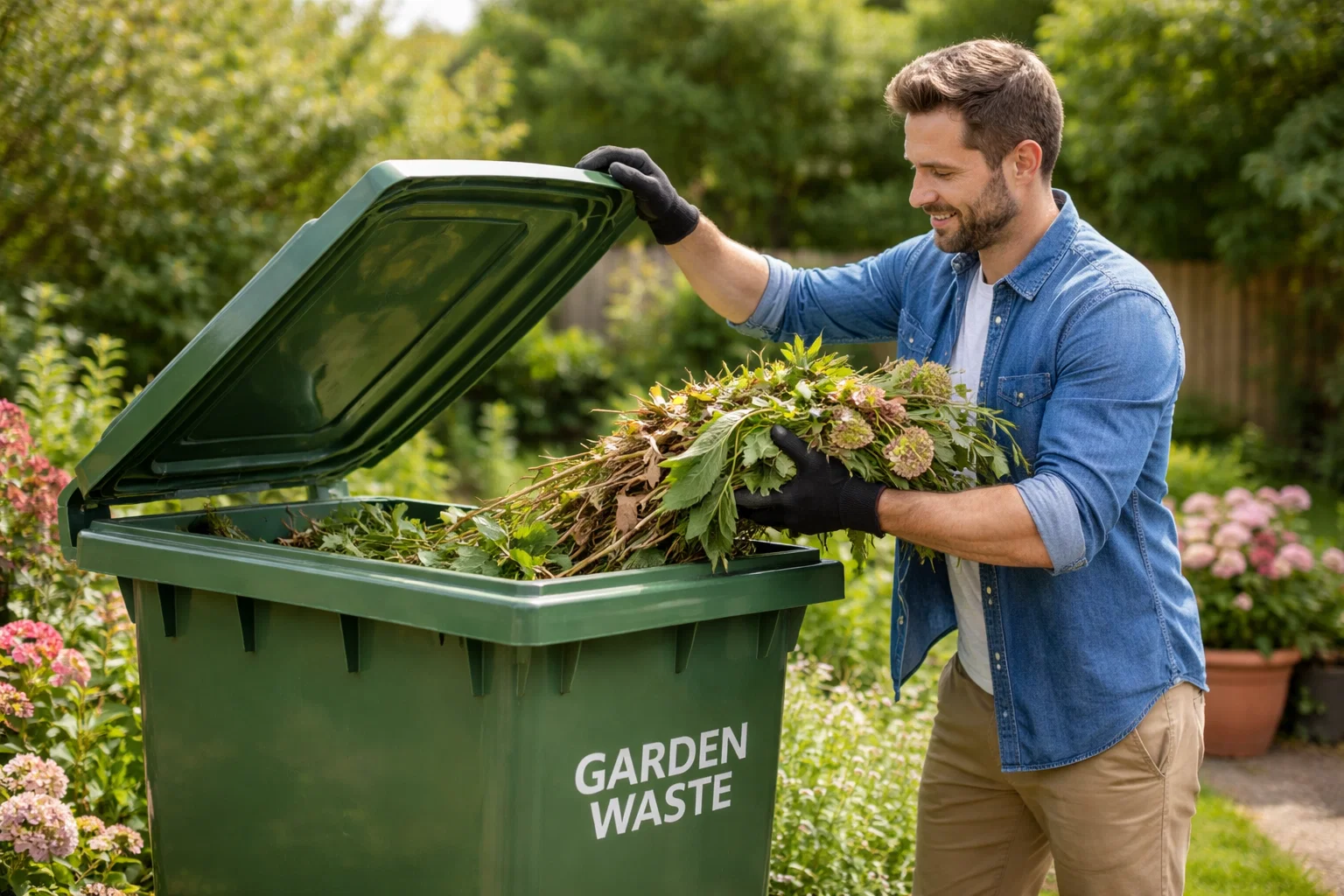
- Garden waste bins: Sign up for the garden waste subscription service for regular collections. Check the council website for current information on this service and any associated costs.
These services keep large or seasonal waste out of general rubbish and make sure it is handled correctly.
Understanding waste collection costs
While household recycling and general waste collections are part of council tax, some services incur additional charges:
- Garden waste subscription: This is a paid service. Check the council website for current information on collection frequency and any associated costs.
- Bulky waste collection: Check the council website for current information on booking and any associated costs.
What are common recycling mistakes in Brighton, and how to avoid them?
Even with good intentions, small errors can contaminate recycling. If the wrong items go in, loads can be treated as waste instead of recycled. Spotting common mistakes is the quickest way to fix them. By following clear Brighton recycling rules and working together, recycling can be effective for everyone.
Which items are often put in the wrong bin in Brighton?
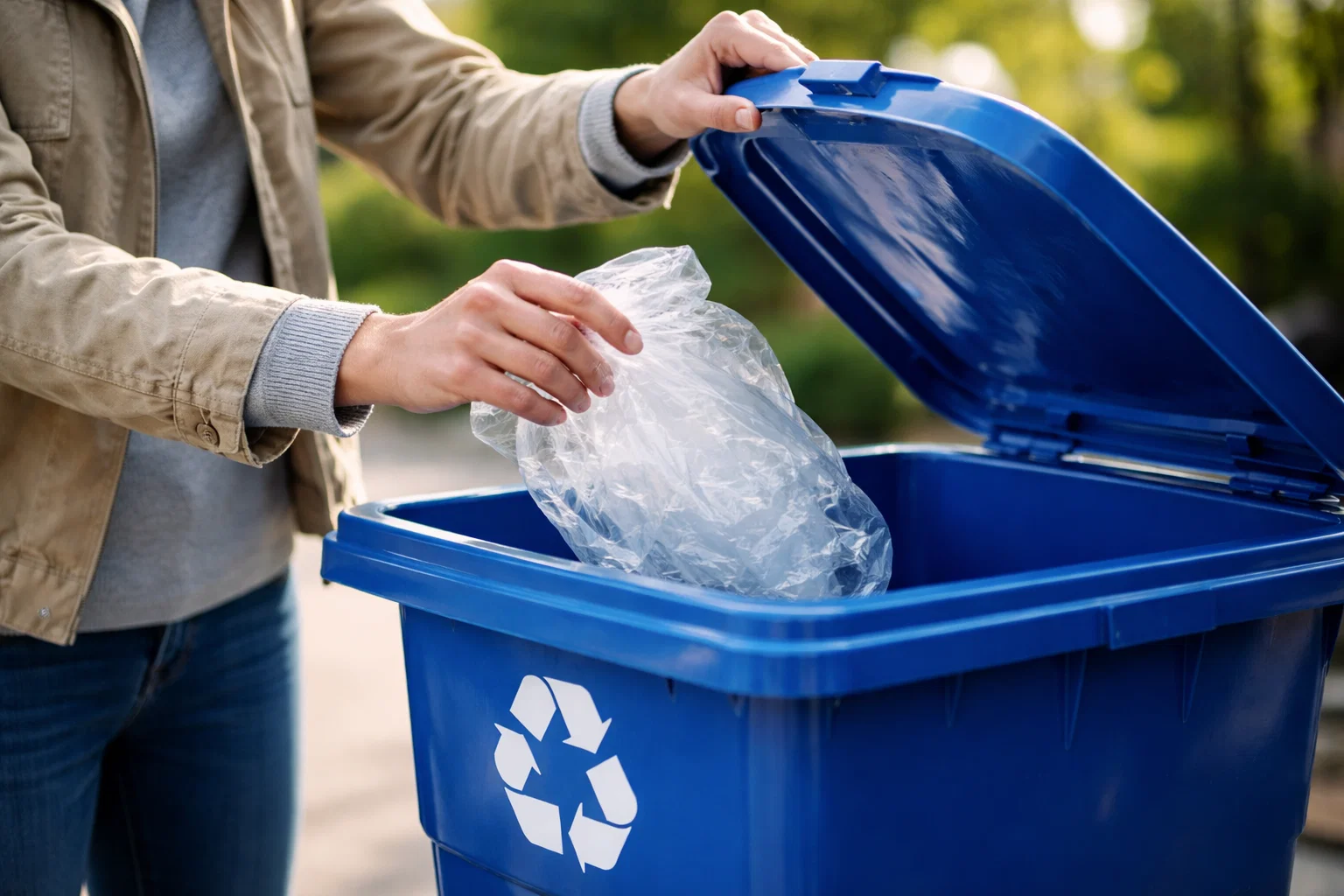
- Plastic bags and plastic film/wrappers: Not accepted in mixed recycling. Reuse or recycle at supermarket soft-plastic points where available.
- Food-contaminated containers: Rinse or scrape leftovers from tins, tubs, and plates before recycling.
- Non-recyclable plastics: Polystyrene and some other non-recyclable plastics are not accepted at kerbside. For specific items, check the council’s Recycling A to Z guide.
Knowing these pitfalls helps keep the recycling stream clean and usable.
How can residents and visitors improve recycling habits?
Small habits make a big difference:
- Learn the local Brighton recycling rules and guidelines: Check Brighton & Hove guidance for tricky items, and always check your bin labels and the council’s collection day checker for your address.
- Use the right bin: Double-check bin labels to avoid cross-contamination.
- Reduce contamination: Rinse containers and remove food scraps before recycling.
These simple steps raise the chances your recyclables actually get recycled. Staying informed and providing feedback helps improve the system for all residents and visitors.
Quick Guide: What Goes Where?
What easy eco wins can Brighton residents and visitors start today?
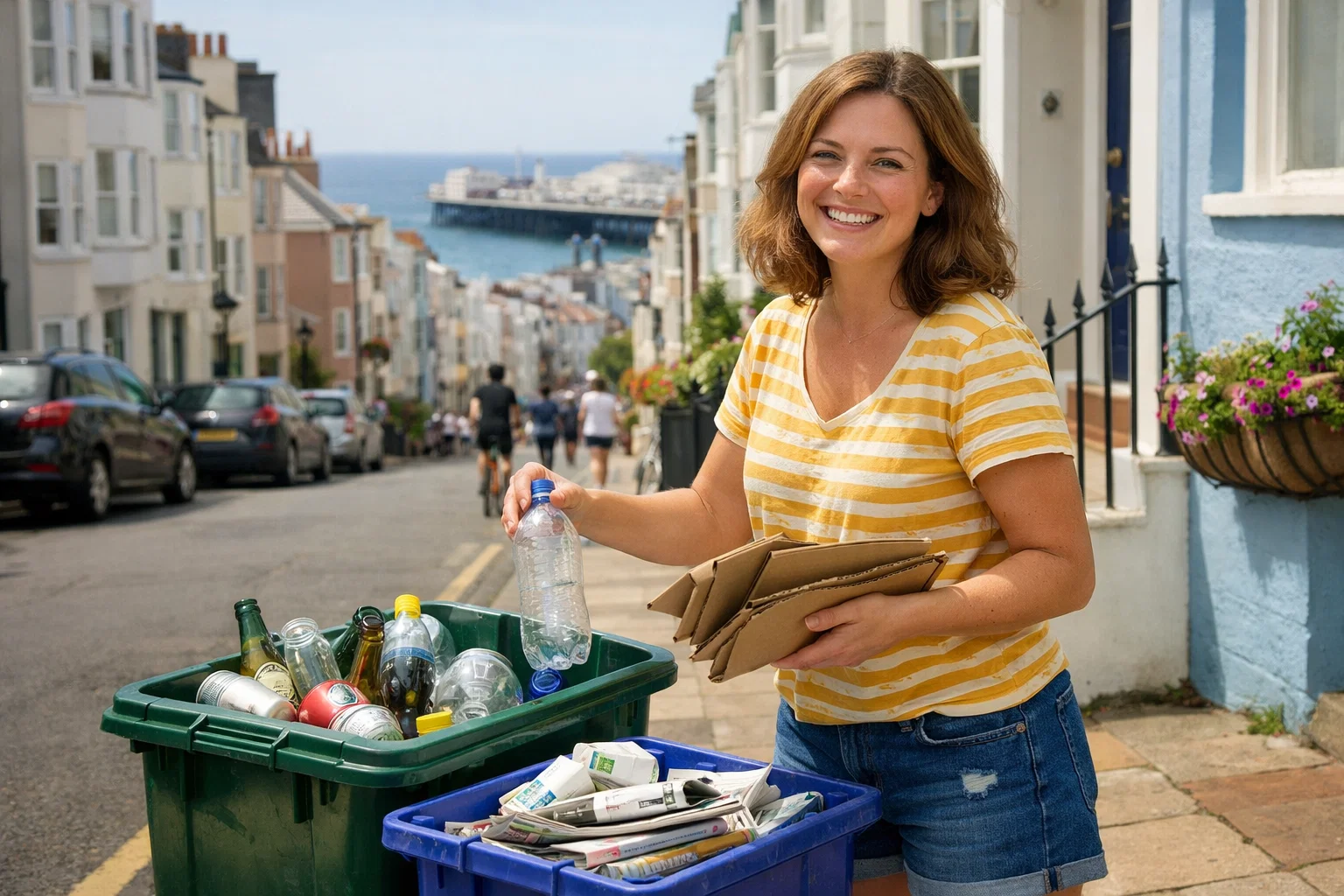
There are plenty of small, practical actions you can take that add up fast. These easy wins cut waste, support local businesses, and keep Brighton cleaner.
How to cut waste and support local, low-waste shops in Brighton
Try these simple habits when shopping locally:
- Bring your own containers: Reusable bags, jars, and tubs reduce packaging waste.
- Buy in bulk: Choose larger quantities to cut single-use packaging.
- Shop local: Support businesses focused on sustainability. Many independent shops, for example, encourage customers who bring reusable bags or containers, and some offer refill or low-packaging options.
Small changes at the till can noticeably reduce household waste over time.
What are easy composting and plastic recycling options in Brighton?
Composting and clearer plastic sorting are straightforward to start:
- Start a compost bin: Kitchen scraps and garden waste make great compost and keep organics out of landfill.
- Join local compost schemes: Community programmes are a great place to learn or share resources.
For plastics:
- Follow local guidance: Sort plastics as the council asks so the right items get recycled, and always check your bin labels and the council’s collection day checker for your address.
- Join recycling drives: Community collection events often accept items kerbside collections do not.
These steps help the environment and strengthen local recycling systems.
Frequently Asked Questions
What types of items can I take to recycling centres in Brighton?
Brighton’s recycling centres accept more than kerbside collections. You can drop off plastics, metals, glass, paper, and cardboard. Bulky waste such as furniture and large appliances is accepted at many sites. Some locations also take small electrical items. For light bulbs and other specific small items, always check the Brighton & Hove City Council’s Recycling A to Z guide and their listing of recycling points. Never put batteries or vapes in recycling or refuse bins due to fire risk; they should be taken to an appropriate return point (e.g., shop take-back, battery recycling point). Check the council’s Recycling A to Z for the correct option. Always check each centre’s guidelines before you go, as accepted materials can vary by location.
How can I find out my specific recycling collection day?
To find your collection day, visit the Brighton & Hove City Council website. There is an address lookup tool where you can see your exact schedule. Collection schedules for recycling and rubbish vary by address. Food waste is collected weekly where available. Knowing your day helps avoid overflowing bins and missed collections.
Are there any special recycling programmes for schools in Brighton?
The council provides resources and support for schools to promote recycling and sustainability. Schools can get help setting up effective recycling systems and participate in community clean-ups. These activities teach students practical habits and build local environmental awareness. For specific programmes, check the council website.
What should I do with items that are not accepted in the recycling bins?
Items not accepted kerbside should go in general waste or be taken to a recycling centre that handles them. Examples include polystyrene, certain plastics, food-contaminated containers, and batteries or vapes (which must go to appropriate return points, never in recycling or refuse bins due to fire risk). If you are unsure, check the Brighton & Hove City Council website or contact local recycling centres for advice.
How can I encourage my neighbours to recycle more effectively?
Start with simple conversations and share local guidance. Organise a community meeting or a local clean-up to raise awareness. You could distribute a short flyer with recycling tips or create a neighbourhood group focused on sustainability. Leading by example is often the quickest way to inspire others.
What are the environmental impacts of improper recycling?
Improper recycling can increase waste and pollution. If the wrong items go in, loads can be treated as waste instead of recycled, undermining recycling efforts. Some materials can also release harmful substances into soil and water if not disposed of correctly. Following local guidance helps reduce these harms and supports a more sustainable community.
What should I do if I accidentally put the wrong item in my recycling bin?
If you spot the mistake before collection, take the item back out and dispose of it correctly. If the bin has already been emptied, do not worry. Just use the right bin next time. Repeated contamination can cause whole loads to be treated as waste instead of recycled, so learning local accepted items will help prevent repeat errors.
Are there any penalties for incorrect recycling in Brighton?
Contamination can prevent recycling from being processed. It is best to follow council guidance to ensure the effectiveness of the recycling service.
How can I get involved in local recycling initiatives in Brighton?
Join local clean-ups, volunteer with environmental groups, or take part in recycling drives. Community networks and environmental organisations often list events and volunteer opportunities. Check local social channels and community boards to get involved.
What are the benefits of composting for recycling efforts?
Composting diverts food and garden waste from landfill, cuts methane emissions, and produces nutrient-rich compost for gardens. It is one of the simplest, most effective ways to reduce the amount of household waste needing other disposal routes.
How can tourists contribute to recycling efforts while visiting Brighton?
Visitors can help by following bin labels (and checking the council’s collection day checker for your address), using bottle banks for glass, and choosing businesses that use less packaging. Learning the basics of Brighton & Hove’s system before you travel makes it easy to leave the city cleaner than you found it.
What resources are available for learning more about recycling in Brighton?
The Brighton & Hove City Council website is the best starting point for understanding Brighton recycling rules. It lists accepted items, collection days, and local recycling centres. Libraries, community groups, and environmental organisations also run workshops and provide printed guides for anyone who wants to learn more.
Recycle with Confidence in Brighton & Hove
Recycling in Brighton & Hove thrives when residents and visitors know the Brighton recycling rules and adopt practical, eco-friendly habits. By following the rules, using the right bins, and backing sustainable businesses, everyone can help create a cleaner, greener city. Check your specific local guidance on the Brighton & Hove City Council website, your bin labels, and the council’s collection day checker for your address, and recycle confidently during your time here. To do more, explore local resources and join community initiatives to make a real difference.